Why Is My Dog Scared of People? (Stranger Danger)
When a dog reacts to people, barking, growling, lunging, snapping, it can feel overwhelming very quickly (cos it is overwhelming). But it’s not just the behaviour itself. It’s everything that comes with it. The worry about having people over to the gaff. The stress when someone approaches on a walk. The constant feeling of “what if something happens?”. For a lot of people, it starts to affect everyday life. I see it all the time, you avoid having visitors. You feel on edge in public. And in some cases, there may already have been a close call or even a bite.
And when children are involved, that pressure ramps up even more. Children are vulnerable and we need to safe guard them. Because now it’s not just stressful, it’s serious. There are real risks, real consequences, and very real fears around what could happen if things escalate. And that’s before we even touch on the legal side of it.
So when people come to me, they’re often not just frustrated, they’re worried and scared. I get that. They’re trying to manage situations, explain their dog’s behaviour, and keep everyone safe at the same time.
And a lot of the time, they’ll say things like:
- “They just don’t like men.”
- “They’re fine with us, it’s just other people.”
- “They’re just very protective of me.”
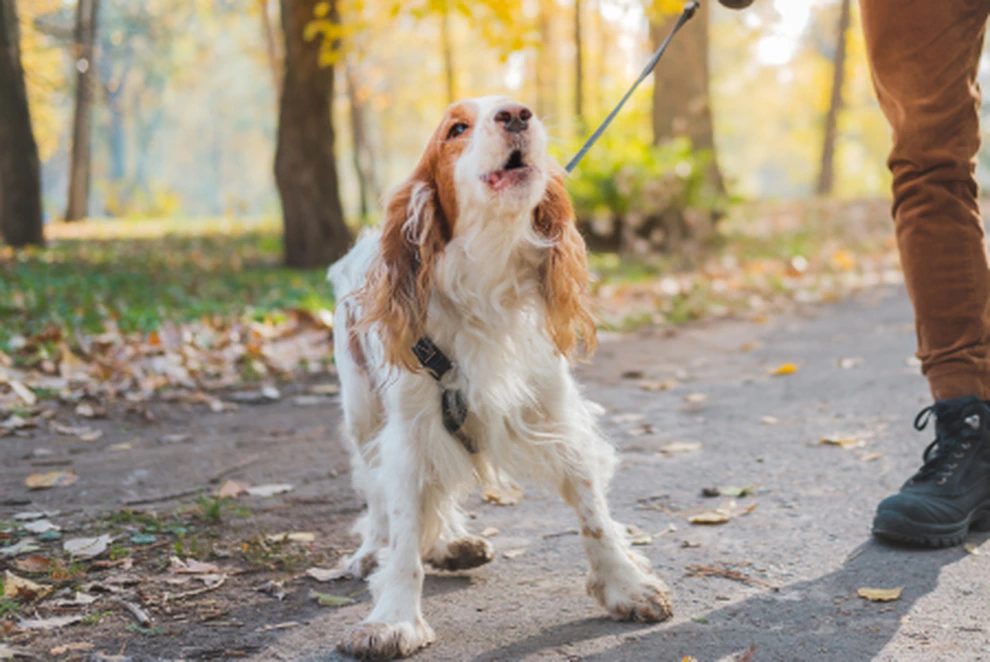
But it’s important to understand this, these behaviours are communication, not character flaws. Your dog is not trying to be difficult, aggressive, or unpredictable for the sake of it. They’re trying to cope and in most cases, what we’re seeing, what we often label as “stranger danger” or aggression, is actually a dog who doesn’t feel safe or comfortable around people in that moment. Those behaviours, barking, growling, lunging, are not a dog’s first choice.
They’re what we call high-cost behaviours. They take energy, they increase stress, and they tend to escalate situations rather than resolve them. Dogs use them when they feel like they don’t have a better option.
Instead of asking “How do I stop this?”, we need to start asking “Why does my dog feel like they need to do this?”, in order to solve the issue.
What “Stranger Danger” Actually Is
When we talk about dogs reacting to people, the word that gets used most often is “aggression.” But that label doesn’t actually tell us very much. Aggression isn’t a personality trait. It’s not a diagnosis. And it’s not a dog being “bad.” What we’re actually looking at is a group of behaviours that serve a very specific function.
In behavioural science, these are often referred to as distance-increasing behaviours. In simple terms, your dog is trying to create space.
That might look like:
- growling
- barking
- lunging
- snapping
- or, in more serious cases, biting
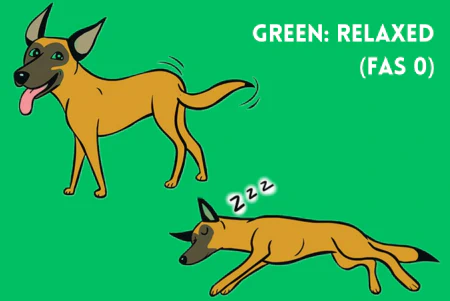
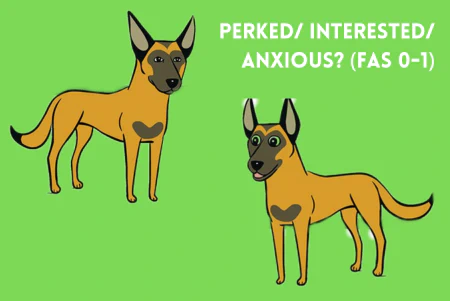
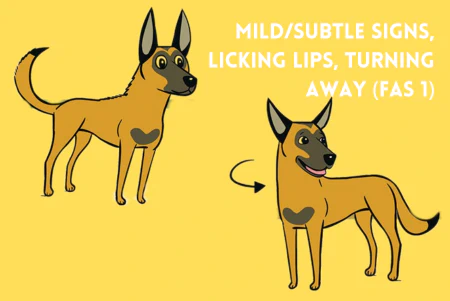
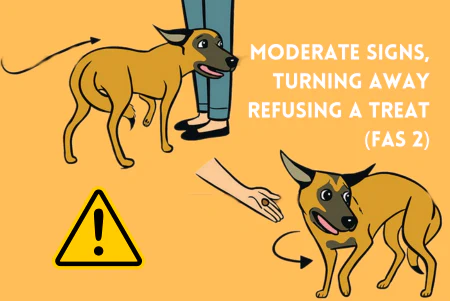
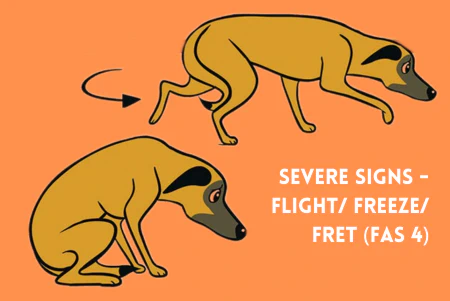
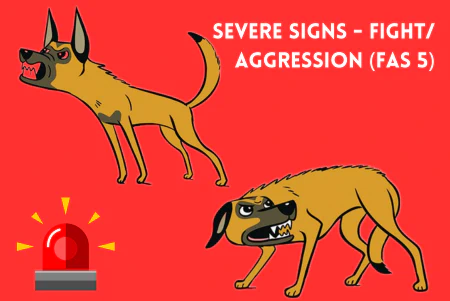
But all of these behaviours sit on the same scale (see images below). They’re different ways of saying “I’m not comfortable with this, please move away.” And this is where the shift in language matters, because if we can see the real behaviour we can stop it escalting.
When we label a dog as “aggressive,” it tends to shut the conversation down. It becomes about stopping the behaviour. Controlling it or correcting it.
But when we understand it as communication, we start asking better questions.
What is the dog reacting to? What are they trying to avoid? What’s making them feel unsafe in that moment?
That’s where the answers are. You’ll also hear the term “reactive” used a lot. And while it’s not perfect, it’s often more helpful. Because it shifts the focus onto the trigger. What triggered the ‘reaction’? The dog is reacting to something in their environment, a person approaching, a hand reaching out, direct eye contact, sudden movement.
And that’s particularly important when we’re talking about people. Because unlike dog-dog interactions, humans bring a whole layer of complexity into the situation. Humans are funny, we move differently. We interact differently to dogs and very often, without realising it, we do things that make dogs uncomfortable.
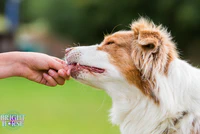
For example you see a cute dog, you reach over their head, leaning into their space, trying to pet them when they’re unsure. From a human perspective, that’s friendly. From a dog’s perspective, that can feel overwhelming or threatening. And if those early signals, things like turning away, lip licking, freezing, are missed or ignored, the dog has to escalate their communication to be heard. That’s when we see the behaviours that worry people most.
Canine FAS Scale
Why It Happens
When a dog reacts to people, it doesn’t happen for no reason. It’s not random, and it’s not something your dog has just decided to do. At its core, it comes down to one thing, your dog doesn’t feel safe or comfortable in that situation, and they don’t have another way to cope.
For many dogs, that starts with fear or anxiety. They may have had a negative experience with a person, or simply not enough positive experiences to feel confident around different types of people. Strangers look different, smell different, move differently and if a dog hasn’t learned that those differences are safe, they can become something to worry about. There’s also a strong learning component here too. Dogs learn through associative learning (learning through experience and association). If a dog repeatedly feels uncomfortable around people, or if interactions with people are unpredictable, overwhelming, or unpleasant, they start to build a pattern, “People = something I need to be cautious about.”
That’s why many dogs are fine with familiar people, but struggle with strangers. With their own people, there’s history. Feeding, play, calm interactions, positive experiences with their human. Over time, those create a strong, safe association. Strangers don’t come with that same learning history. So the dog has no reason yet to feel safe, and in some cases, they may already have reasons not to. Human behaviour plays a huge role here as well. And this is the bit that often gets missed.
Because from our perspective, we’re trying to be friendly. When we, as the stranger, reach out to pet the dog, lean over them, go straight for their head or face. But from the dog’s point of view, that can feel intrusive or overwhelming. If a dog is already unsure, and someone ignores those early signals, things like turning away, freezing, lip licking or avoiding eye contact, the dog learns something “Subtle communication doesn’t work.”. So they escalate, They growl, snap, or they use stronger behaviours that actually make the person move away. And that works. Which means the behaviour is reinforced, because it achieved exactly what the dog needed in that moment.
Context also matters. Some dogs struggle more in the home, where they feel responsible for the space. Others struggle more outside, where the environment is less predictable. It often comes down to what the dog has experienced and learned in those environments over time. Life experiences can shape this as well. Changes in routine, moving house, new people entering the home, or a lack of appropriate socialisation early on can all influence how a dog feels around people. Dogs who have experienced rehoming, inconsistency, or previous stress may also be more sensitive in these situations, not because they’re “damaged,” but because their past has shaped how they respond.
Pain and physical discomfort should never be overlooked either. If a dog is sore, unwell, or uncomfortable, their tolerance for interaction drops. Being approached, touched, or handled can feel threatening, even if it wouldn’t normally.
And finally, there is individual variation. Some dogs are simply more sensitive, more cautious, or more easily overwhelmed than others. That can be influenced by genetics, early development, and temperament.
Common Causes of Reactive Behaviour Toward People
There are many underlying reasons a dog may show reactive behaviour toward humans. No two dogs are the same, and the context around their behaviour matters. Some of the most common causes include:
Fear or anxiety: Dogs who have had frightening experiences whether due to trauma, poor early socialisation, or unpredictable environments may see people as a potential threat. Their reactive behaviour in these moments is often their way of saying, “Please move away you’re a bit scary to me.”
Pain or medical issues: A dog who is injured or dealing with chronic pain may become reactive, especially when touched, approached suddenly, or handled in certain ways. This kind of reactivity can be their way of saying, “Please move away I’m not feeling great.”
Frustration or confusion: If a dog doesn’t understand what’s being asked of them or feels trapped, they may lash out as a way of expressing that discomfort. This behaviour may be their way of saying, “Please move away I feel trapped and confused.”
Resource guarding: Dogs may protect valued items such as toys, food, resting spots or even a specific person from perceived intrusions. This behaviour can be their way of saying, “Please move away I really need this item, it’s very important to me.”
Genetics or breed tendencies: Some dogs may have a genetic predisposition to heightened sensitivity, guarding, or protectiveness.
What People Get Told (And Why It Backfires)
By the time most people start looking for help with this, they’ve already tried a few things. They’ve been given advice from friends, family, trainers, or things they’ve seen online. And a lot of that advice sounds reasonable on the surface.
You’ll often hear things like:
- “They’re just being protective.”
- “They don’t like men.”
- “You need to show them who’s in charge.”
- “Correct it when it happens.”
And sometimes, people follow this advice because they don’t know what else to do. The problem is, these explanations don’t really tell us what’s going on and they don’t lead to solutions that actually help the dog. Take the idea of a “protective dog.” This is something I hear all the time. Someone comes into the house, the dog reacts, and the explanation is “They’re just protecting me.” And while it can look that way, what’s usually happening is something quite different.
The dog isn’t protecting you. They’re trying to protect themselves, or maintain distance from something they find uncomfortable. It’s still a protective behaviour, but it’s not about guarding you as a person. It’s about the dog feeling the need to manage the situation in the only way they know how.
I also hear things like “They just don’t like men.” And while there can be patterns like that, it’s not about a dog randomly deciding they dislike a certain group of people. It usually comes back to learning and experience. If a dog has had limited or negative experiences with certain types of people, or hasn’t built positive associations, then those individuals become more difficult for them to process and feel safe around.
Then there’s the idea that you need to correct the behaviour. And while that might interrupt the behaviour in the moment, it doesn’t change how the dog feels. In fact, it can make things worse. Because now, not only does the dog feel uncomfortable around people, but that situation also predicts something unpleasant happening to them. So instead of improving the situation, we risk reinforcing it.
This is the common thread through all of these approaches. They focus on stopping the behaviour. But they don’t address why the behaviour is happening in the first place. And until we deal with that underlying emotional response, the behaviour will keep coming back in one form or another.
It’s Not Your Fault
One of the most painful aspects of living with a reactive dog is the guilt and shame many owners feel. I often see clients who are so embarrassed by their dog’s behaviour that they start to hide away, avoiding walks or visitors altogether. You’re not alone, please don’t just trust me here, studies show that around 76% of dogs will show some form of reactive behaviour in their lifetime. That means most dog owners have experienced this in some way. You have nothing to feel guilty about your dog’s behaviour is not a reflection of your love, care, or commitment. It’s a sign they need help, not that you’ve failed. Reactive behaviour can develop even in dogs raised with compassion and consistency. Pain, trauma, fear, or even subtle environmental stressors can all play a role. Blame doesn’t help but understanding, support, and education do.
What Actually Helps (And Where to Start)
The goal here isn’t to stop the behaviour. It’s to change how your dog feels about people. Because once the emotional response changes, the behaviour follows. That starts with taking a step back and working at a level your dog can actually cope with. Not pushing them into situations that overwhelm them, not expecting them to “just deal with it,” and not trying to train through panic.
In practical terms, that often means creating more distance. Giving your dog space from people, especially in situations where you already know they’re likely to struggle. That might be crossing the road on a walk, managing how visitors enter the home, or simply not putting your dog into situations they’re not ready for yet.
It also means changing how people interact with your dog.
This is a big one. And often a hard one, as other people are often out of your control.
Because a lot of the time, the pressure is coming from well-meaning human behaviour. People reaching out to touch them, leaning over them and trying to engage when the dog isn’t comfortable. Even if you tell them “Please don’t pet my dog”, folks still do it…
Part of the work is helping your dog, but part of it is also advocating for them. Setting clear boundaries around how others approach and interact, and recognising when your dog needs space rather than more exposure. From there, we start building new associations. This is where we use counter-conditioning (changing the emotional response) and desensitisation (gradual exposure at a level the dog can handle).
That means introducing your dog to people at a distance or in a way that feels safe, and pairing those experiences with something positive. Over time, your dog learns that people don’t predict something overwhelming or threatening, they start to predict something neutral, or even positive. But this has to be done at the right pace. If we move too quickly, or push too far, we risk reinforcing the original problem.
It’s also important to be realistic about what helps and what doesn’t. A quick fix won’t solve this. More exercise on its own won’t solve it. Ignoring the behaviour won’t solve it. And forcing your dog to “get used to it” will often make things worse.
This kind of behaviour change takes time, consistency, and a clear plan. But when it’s done properly, you start to see real progress. Not just in the behaviour itself, but in your dog’s overall confidence and ability to cope. And that’s the goal. Not just a dog who doesn’t react, but a dog who feels more comfortable in the world around them.
If you’re dealing with this, you’re not the only one. This is one of the most common challenges I see in practice, and while it can feel overwhelming, it is something we can work through with the right approach. The most important first step isn’t fixing it. It’s understanding it properly.
Because once you understand what your dog is trying to communicate, everything else becomes much clearer, what to do, what not to do, and how to start supporting them in a way that actually makes a difference.
5 Things Every Guardian of a Reactive Dog Should Know
If you’re reading this and thinking, “this sounds like my dog…”, then this is a good place to start. My free guide, “5 Things Every Guardian of a Reactive Dog Should Know”, will help you:
- understand what your dog is actually reacting to
- recognise early warning signs
- and avoid some of the most common mistakes that can make things worse
Because the goal isn’t just to manage the behaviour.
It’s to help your dog feel safer, more confident, and better able to cope in situations that currently feel difficult.
References
- Landsberg, G., Hunthausen, W. and Ackerman, L., 2013. Behavior problems of the dog and cat. 3rd ed. Saunders Elsevier.
- Overall, K.L., 2013. Manual of Clinical Behavioral Medicine for Dogs and Cats. Elsevier Health Sciences.
- Horwitz, D.F. and Mills, D.S., 2009. BSAVA Manual of Canine and Feline Behavioural Medicine. 2nd ed. BSAVA.
- Moffat, K., 2008. Addressing canine aggression in veterinary practice. Veterinary Clinics: Small Animal Practice, 38(5), pp.983–1003.
- Mills, D.S., 2003. Medical paradigms for the study of problem behaviour: A critical review. Applied Animal Behaviour Science, 81(3), pp.265–277.
- de Souza-Dantas, L.M., Döring, D. and Hohlbaum, K., 2017. Aggressive behaviour in dogs – a review of diagnosis and therapeutic approaches. Veterinary Record, 181(13), p.348.
- Haug, L.I., 2008. Canine aggression toward unfamiliar people and dogs. Veterinary Clinics: Small Animal Practice, 38(5), pp.1023–1041.
- Casey, R.A. et al., 2014. Human-directed aggression in domestic dogs (Canis familiaris): Occurrence in different contexts and risk factors. Applied Animal Behaviour Science, 152, pp.52–63.